- Fintech's Guide to Emerging Banking Trends and Opportunities
- Posts
- "The landscape is complex and ever-changing, but there are things you can do to put yourself in a much better position as a business." - Meghan Anzelc, Chief Data Office, Three Arc Advisory
"The landscape is complex and ever-changing, but there are things you can do to put yourself in a much better position as a business." - Meghan Anzelc, Chief Data Office, Three Arc Advisory
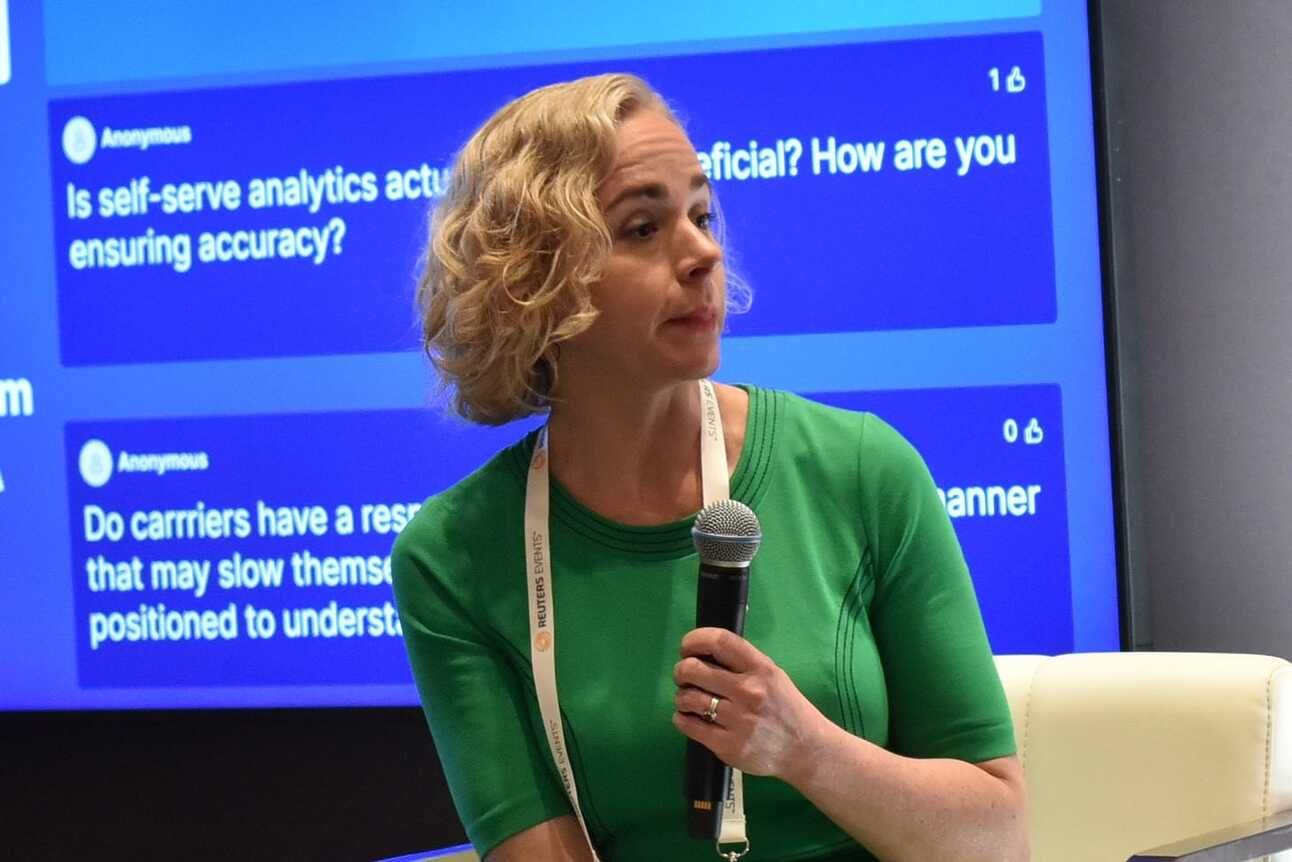
Hello Meghan, thank you for taking the time to speak to me. Can you tell me more about yourself and how you started your career in technology? Why did you choose to go into data and analytics?
Most people pursue a PhD in physics because they want to be a professor. I pursued a PhD with the intent of doing research full time after getting a PhD. While I was in grad school, I realised there are almost no pure research jobs anymore - almost everything is a combination of teaching and research. Additionally, most of the US Department of Energy labs had been under a hiring freeze for a few years and there were very few openings. Careers are different up close compared to what I thought they would be when I was an undergraduate. Not better or worse, just different. I realised there were only a couple hundred people in the world who cared about my dissertation research, and any broader benefit of my work beyond basic science research wouldn't appear for decades, if ever. I wanted to do something more applied and where I could see the impact.
From here, I decided that there were probably a lot of physicists who had left academia and were both happy and successful. I set out to find some of them and do informational interviews – the results of many of those interviews can be found here: https://engage.aps.org/fgsa/resources/careers/non-academic-careers
Eventually, a friend of mine connected me to someone she knew working in insurance and who also had a physics background. This person was working in a data science team, and so could explain how a physics background helped, what was challenging/interesting, and what the job was like. At the end of the informational interview, he said "We're hiring, would you be interested?" and that turned into applying and interviewing for, and eventually accepting, a job with Travelers Insurance in their data science team.
Before you went on building the first D&A function at Spencer Stuart, you led teams and built D&A capabilities across insurance companies. Can you tell me more about your work in this industry?
Data science and the use of artificial intelligence and machine learning have actually been around for a long time in the insurance industry. Segmenting risk is a critical piece of insurance and data scientists do this really well.
What were the challenges you experienced?
In my work, communication and change management were always the most challenging aspects. That can be everything from getting team members aligned to a common goal to getting business users to buy into the idea of analytics or adopt a new analytics solution we developed, or helping work through issues where people disagree on the best approach or just generally don’t work together very well.
How did you approach those challenges?
I’ve found that building trust and credibility goes a long way. I’ve had business unit leaders who were very skeptical that I could add any value and were defensive of their deep expertise in a product or line of business. Starting by respecting the experience of others, showing genuine interest in learning and understanding their perspective, and illustrating how analytics can align with what they want helps a lot.
What are the lessons you took from your work in the insurance industry?
Unlike most of what we’ve been hearing lately about artificial intelligence (AI) and Generative AI, I have an extensive background in building and executing AI in highly regulated companies. Understanding how to proactively and reactively work with regulators, and how to partner with internal teams from Legal, Information Security, HR, etc. have provided me with a mindset that is centred on risk management – both managing the upside and downsides of risk to protect organisations and customers from harm while achieving significant benefits and value.
How has this experience helped you in your career moving forward?
I’ve brought this mindset into roles in other industries. The landscape is complex and ever-changing, but there are things you can do to put yourself in a much better position as a business. As an example, we’ve seen new regulations in the HR space around pay transparency, usage of AI in hiring processes, etc. Regulations will likely continue to evolve. Ensuring you have a strategic approach to using AI in HR that accounts for what’s most likely to be needed going forward, along with best practices like documenting what you did and why, will put you in a stronger position going forward as new regulations emerge.
Apart from building fantastic D&A programs, you also recruited, retained, and developed teams from multicultural, multinational backgrounds. Can you share some of your experience in doing this?
My experience in graduate school has definitely influenced me. I worked on a large (2,000-person) experiment with collaborators spread all over the globe, with most operating virtually and a few hundred in person with me at the lab. I worked closely with people from Japan, South Korea, Russia, Germany, India, and many other countries.
What do you look for in a person?
People who are interested in learning – no one knows everything when they start a new job. People who are interested in learning from and working with others – so much of our work is collaborative and the best solutions come from teams that share their unique perspectives and work together.
What are the main characteristics you look for?
As a hiring manager, the most difficult skill to hire for is the ability to think critically about the data and the problem at hand, to break down a problem into solvable steps, and to correctly evaluate whether the results make sense or not.
When I’m hiring managers, it’s also about their leadership style and approach to managing and leading their teams.
What are the main positive characteristics of the different working cultures that you can share?
I’ve found it to be a great way to learn more and learn faster. People have a range of ways of approaching a problem or ways of interacting with others, often very differently from how I might do things. Approaching with curiosity to understand why and their view on what approach will work best can be eye-opening to a completely new solution.
What characteristics have you seen that you thought “I don’t like this”?
We’re all people who have lives outside our work. I’ve seen people who seem to have a complete lack of empathy for what a team member is going through and I have a hard time understanding that. Again, I think that curiosity about others and envisioning what it might be like to be in their shoes go a long way.
How do you lead multicultural, multinational teams and what lessons have you learned?
I think the biggest thing is to stay aware of how little I know about other cultures and countries, that I certainly don’t know everything and may not understand someone’s background or culture.
As someone from the US, I try very hard to communicate that a global team is just that - a global team. That may mean I spend more time on a plane to visit teams in other countries, or that we pilot an initiative in a different region or even a language other than English.
I also try not to burden colleagues with my own ignorance - I try to learn on my own as much as I can so that if I’m leaning on them to help me through a cultural difference, I’m not a complete beginner to the conversation.
We already mentioned that you built the first D&A function at Spencer Stuart, tell me more about your work at the company.
Spencer Stuart is a company helping enterprises attract and recruit senior leadership and C-suite talent across the globe – an industry very different from your background in insurance.
After spending a decade in insurance, I was looking to switch industries and felt the people analytics space would be really interesting to work in. Spencer Stuart recruited me and it seemed like a great fit both from an industry perspective as well as having an opportunity to have a big impact on the firm.
What were the challenges?
Unlike the insurance industry, data science and AI are much newer to the executive search industry. That meant a larger part of my role was about building relationships and evangelising how analytics and AI could be helpful in their work with clients and candidates.
In addition, because it was so new to the organisation, there hadn’t really been anyone giving voice to the need for data and thinking about data as an organisational asset. Building momentum around that mindset and culture shift was also a big part of my work.
How do you innovate in an industry that you haven’t worked in before?
It goes back to starting by building credibility and trust. When I started, I was upfront with partners and consultants I met that I didn’t know their industry and I’d need their help to understand it, to identify potential use cases and areas of greatest opportunity. I also did a lot of research and competitive intelligence gathering to understand what Spencer Stuart’s clients were doing with data science and AI in their HR and talent teams, as well as what competitors and adjacent organizations were doing.
How did you report to the business?
As many ways and as many times as you can. I’ve never received feedback that I communicated too much. I’ve used a range of approaches, depending on the culture and priorities of the business. These have included management presentations, board documents and presentations, intranet articles, short video updates, internal knowledge-sharing groups, office visits, joining others’ team meetings or calls, and meeting people individually.
Was there a good buy-in from the senior leadership team around the D&A practice, the technology, and the actions that you needed to take in order to succeed?
There were some colleagues who were completely bought in and excited and wanted to help wherever they could. There were also a lot of people who didn’t really know what analytics or AI was or how it was related to their day-to-day. And like any company, there were a few skeptics who didn’t think this would benefit them. My approach at a high level is to get the supporters' help as early as possible and have them help bring their peers along. With the neutral middle, it’s about showcasing what we’re doing and why they should care and giving them concrete examples to make it come alive. The skeptics can sometimes become your most vocal supporters so it’s important to keep an eye out for those opportunities. If you have detractors who are actively working against you, that needs to be managed as well.
Tell us about your career today.
I consult executive teams who are struggling to get started with AI and I work with boards of directors to help them ask the right questions about their organization’s AI strategy and governance. I also work with companies whose core business is data or AI-based products and need guidance around product and GTM strategy. In the current hype cycle around AI and Generative AI, I provide a practical and grounded voice to cut through the noise and give people a strategic approach that is tailored to their company and its needs. My decade of experience building and deploying AI in highly regulated organizations means I have a risk management mindset that is unique compared to other AI experts.
Did you have to use industry analysts in your work (Gartner, Forrester, IDC, Celent, Aite, etc.)?
Absolutely! At different points in my career, I’ve used organisations like this for a range of needs. This includes gathering input to craft a strategy, put a strategy in the context of the larger landscape, or help executives and board members understand where we are relative to the market and the implications of different strategic choices. I’ve used this kind of information for D&A strategy as well as informing M&A strategy.
Why should women look to build a career in technology?
It’s very clear why technology should recruit and retain more women (and other under-represented groups). There is a wealth of research showing that better solutions and better financial results come from diverse teams.
There is obviously a need for greater diversity of talent in technology and there is a really wide range of roles, from deeply technical to business-focused to management and leadership.
I’ve found the business problems in technology are fascinating, challenging, and multi-dimensional. At least for myself, I’m someone who enjoys challenging work and getting to see the impact of my work on the organizations I’ve been a part of. I’m lucky to have found my career fulfilling and challenging in ways that have helped me grow and continue learning.
Can you share any tips or advice from your day-to-day work and that you have learned throughout your career?
Communicating and influencing have been some of the most valuable skills I have developed. Building relationships and a network has also been incredibly valuable. When I’ve experienced a challenge I’m really struggling with, I try to find others who have gone through something similar and learn from them – that has helped me try different strategies and tactics as well as broaden and expand my network over time.
I negotiated (successfully!) my first job offer, but at the time didn’t appreciate that I would really have to push and fight for raises, promotions, and job offer compensation at every step of my career. In some ways that’s disheartening, but I think if I had known I might have been better prepared mentally – or better yet, would have taken a negotiation course in college or graduate school and had better negotiation skills earlier!
Are there any challenges that you consistently experienced in your career and how did you overcome them?
I think the challenges I’ve experienced are common to many women and other under-represented groups. All of my bosses throughout my professional career have been men. I noted the need to advocate for myself in career discussions earlier. Having a PhD offers me some amount of instant technical credibility but I still occasionally interact with people who don’t think I understand numbers or technology. I have also taken more risks than most people I know, which has led both to challenges but also amazing growth and opportunity.
If you could give one piece of advice to women working in technology, what would it be?
Advocate for yourself, no one cares more about your career than you!
Meghan, thank you very much for speaking with me and for sharing your career wisdom. It has been great to have you!